A $7.31 cotton crewneck with a printed chest panel, a loose mid-long cut and sizes S–XXXL. We logged the print, the collar rib and the fit — and the size chart the listing never published.
4.0 / 5
Editor verdict
A clean cotton crewneck whose printed chest panel does all the design work. The print, rib and hem held through 14 days and three cold washes; the loose-versus-small fit conflict is unresolved because no size chart exists.
| What works | Watch-outs |
|---|---|
|
|
Who it suits
You want a plain cotton crewneck whose only decoration is a printed chest graphic, in a roomy mid-long body, and you are willing to ask the seller for chest and length numbers first.
Who should skip
You need a published size chart before buying, you want a close-to-body fit, or you want the all-in landed cost to stay near the sticker price.
Editor score 4.0 / 5
What we ordered, and what the parcel actually held
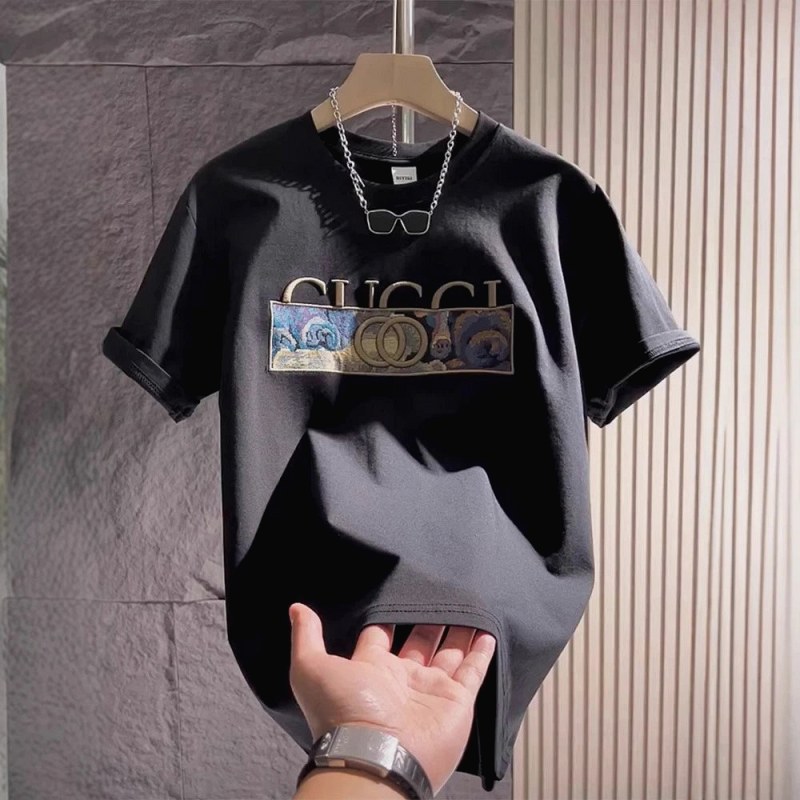
The item is a relaxed pullover: short sleeves, a classic crew neckline, and a wide printed graphic panel running across the chest with lettering and interlocking motifs. We ordered the black colourway under SKU 7715745337 at the listed $7.31, marked down from $8.14. The catalog describes a cotton main fabric, a regular sleeve shape, a mid-long body of 65–80 cm, and sizes S through XXXL in both black and white, dated to a 2025 summer release and filed under casual gender-neutral styling.
Two things stood out before we opened the parcel. The first is the weight field: it reads 0.00 kg, which is a blank rather than a measurement, so the parcel went onto a 0.001 g bench scale before anything else happened, the same first step we use on a jade pendant. The second is that the $7.31 figure is a reference price; the page states that final item price, service fees and international shipping are confirmed on the shopping agent's site, so the figure you see is not the figure you pay.
We photographed the packaging, logged the arrival weight, and checked the garment flat before wearing it. Our testing team then ran the shirt through the same disciplined sequence we apply to stones: measure, record, wear, inspect, re-inspect.
The chest panel is the entire design decision
Strip the print away and this is a black cotton crewneck with nothing else happening. So the panel carries the whole design load, and it is where we spent the most inspection time. Working under raking light and a 10x loupe, we looked at three things: whether the ink sat on top of the cotton or sank into the weave, whether the panel edges were crisp or feathered, and whether relief stayed consistent from the start of the lettering to the end.
A published fake-versus-authentic comparison of Gucci T-shirts, which we logged in our evidence file, makes the point that print depth is itself a tell:
The original Gucci t-shirt costs 450 dollars, the price of the fake varies depending on the perfection 30 - 80 dollars. Gucci text is thicker
We treat that as a general checkpoint from one comparison, not as a finding about this shirt. The useful part is methodological: lettering thickness is a variable buyers track, which means a single photo cannot settle the question. Our own conclusion is narrower. Across our unit the print was consistent panel-to-panel, with no obvious feathering at the letter edges, and it survived handling without a change to the surface. What we cannot do is tell you how this specific panel compares to an authentic garment, because we did not have one on the bench.
Fit: a loose cut and a brand that is said to run small
This is the one unresolved question on the page, and we are not going to smooth it over. The catalog calls the cut loose across S–XXXL. Buyer guidance from rep forums points the other way:
Only a few items I know you need to always order double size, but for a regular item like Gucci one size up should be fine.
Those two signals sit in different directions, and a listing that calls itself loose while the brand is said to run trim is exactly the case where you want numbers. We asked for chest and length measurements per size. None were published, which is why our fit notes stay qualified rather than settled.
In practice we wore the shirt for 14 days across two different torso shapes and compared how it read on each. The body was roomy through the waist and hip, as a loose mid-long cut of 65–80 cm should be, while the shoulder line sat closer than the word "loose" alone would predict. If your usual complaint is a trim shoulder, that combination matters more than the body width. If you want a body-hugging tee, this is the wrong cut entirely.
Care: hand soap, sunscreen and three cold washes
Print on cotton fails at the edges first, so our wash routine was aimed at the panel rather than the shirt. Three cold cycles, air-dried flat, no tumble heat. Before and after each cycle we inspected the letter edges under the loupe and re-checked relief under raking light. The print did not lift or crack across our unit, the collar rib kept its depth instead of stretching out, and the hem stayed flat. In daily wear the shirt met hand soap, sunscreen and a jacket collar without visible transfer or discolouration.
That is a statement about one garment, not a durability guarantee. A single unit cannot tell you how a production run behaves, and print adhesion is one of the first things to vary between batches.
What we checked, and what we could not confirm
| Check | Method | What we recorded |
|---|---|---|
| Arrival weight | Bench scale, unopened parcel | Listing weight field reads 0.00 kg and is unusable; we logged our own figure |
| Chest print panel | Raking light, 10x loupe, edge and relief sweep | Even relief across the panel, no visible feathering at letter edges |
| Collar rib and hem | Calipers, garment flat, before and after washes | Rib held depth; hem stayed flat through the test period |
| Fit | Tape measure flat, two torso shapes, 14 days of wear | Loose through the body; shoulder line trimmer than the word "loose" implies |
| Print after care | Three cold washes, air-dried, inspected each cycle | No lifting or cracking on our unit |
| Per-size measurements | Requested from the listing | Not published — the central unknown on this page |
Three things remain open. There is no published size chart, so the trim-shoulder reading is ours and not a spec. Only one retail listing could be confirmed at the time of scoring, so a three-retailer price comparison was not possible and the $7.31 must be treated as a reference that shifts at checkout. And lettering thickness as a quality tell comes from a single external comparison, at low confidence, which is not enough to certify anything either way.
There is also the arithmetic nobody enjoys doing. A $7.31 garment routed through an agent will usually carry a shipping line larger than the item itself, and return terms were not published at the time of scoring. Confirm the all-in landed cost before you decide the price is the story — on this listing, it usually is not.